
As Honkai: Star Rail sails through its third year in 2026, the echoes of its first public demo at Gamescom 2022 remain surprisingly vivid. The sci-fi fantasy RPG, developed by HoYoverse, now commands a massive player base and a steady stream of expansions, yet the central question posed during that hands-on preview still clings to the conversation like a persistent shadow: does a turn-based combat system wrapped in a Genshin Impact aesthetic feel more like a clever reinvention or a missed opportunity?
Back then, the accusations that all anime games look identical was already a worn-out drumbeat. From a distance, FIFA and eFootball blend into a blur, just as Apex Legends and VALORANT can seem like kinetic twins, or Ghost of Tsushima and Assassin’s Creed can be mistaken for long-lost cousins. Within the anime genre, however, fans recognize the subtle brushstrokes that separate one title from another. Honkai: Star Rail was always fighting an uphill battle of perception because it shares its lineage with both Honkai Impact 3rd and the global phenomenon Genshin Impact. At that Gamescom booth, the demo whispered, “I am my own game,” but the visual grammar screamed Mondstadt.
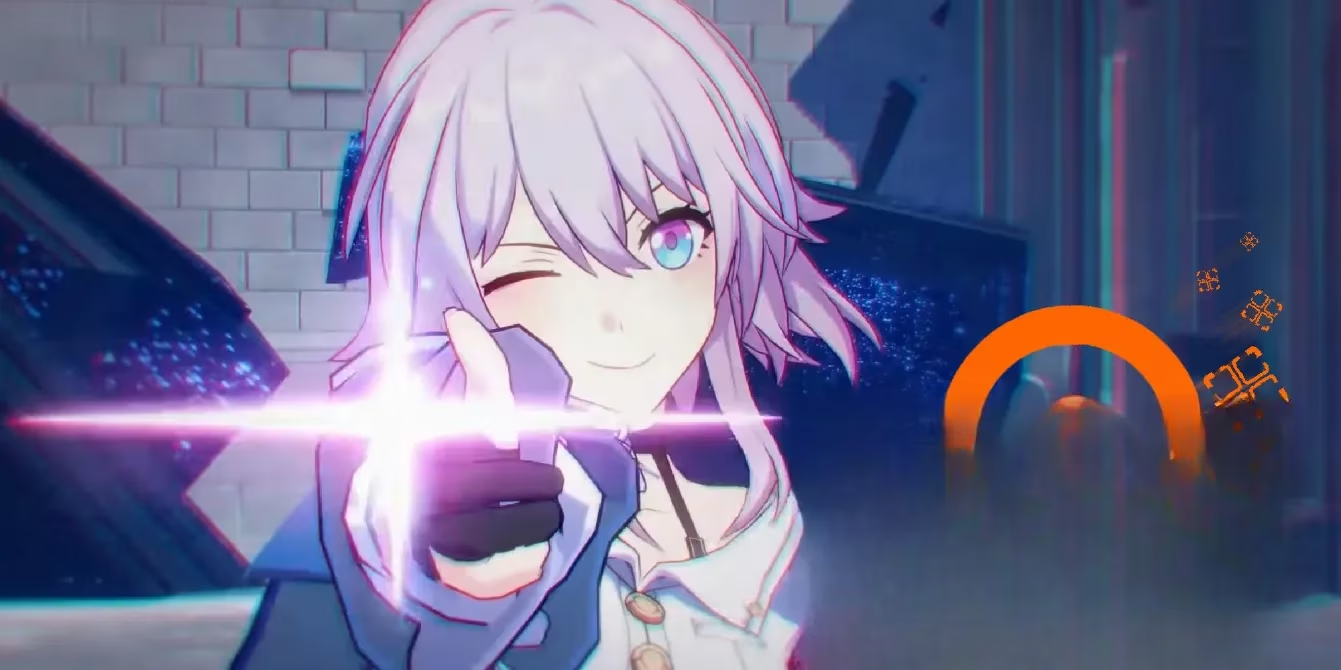
In the hands-on session, players were given a fixed squad of four characters, instantly recognizable archetypes: a damage dealer, a tank, a healer, and a support. The sluggish beauty of turn-based strategy settled over the experience like a slow-motion dance—each move deliberate, each ultimate a awaited exhale. At first, the roles clicked into place with satisfying clarity. The tank absorbed blows like a shield catching raindrops, the healer knitted wounds quietly, and the damage dealer built up power until it erupted. Yet as the minutes ticked by, a quiet yearning crept in. The characters, so vibrant and ready to leap, were chained to a turn order, waiting for their moment like racehorses held at the gate. It felt as if the developer had handed you a Ferrari and then forced you to drive it in a parade.
This tension became almost unbearable during the Fight Club gauntlet. The demo team lacked a healer for that segment, while enemy forces could resurrect fallen allies with the hydra-like stubbornness of a regenerating myth. What should have been a tactical puzzle dissolved into a loop of attrition, a fly trapped in amber—each turn a carbon copy of the last. The action combat of Genshin Impact, for all its explosive confusion, rarely suffers from this stagnation. There, even a mistimed Xiangling whirlwind leaves ashes you can dance through. In Star Rail’s slower rhythm, patience was both a virtue and a punishment.
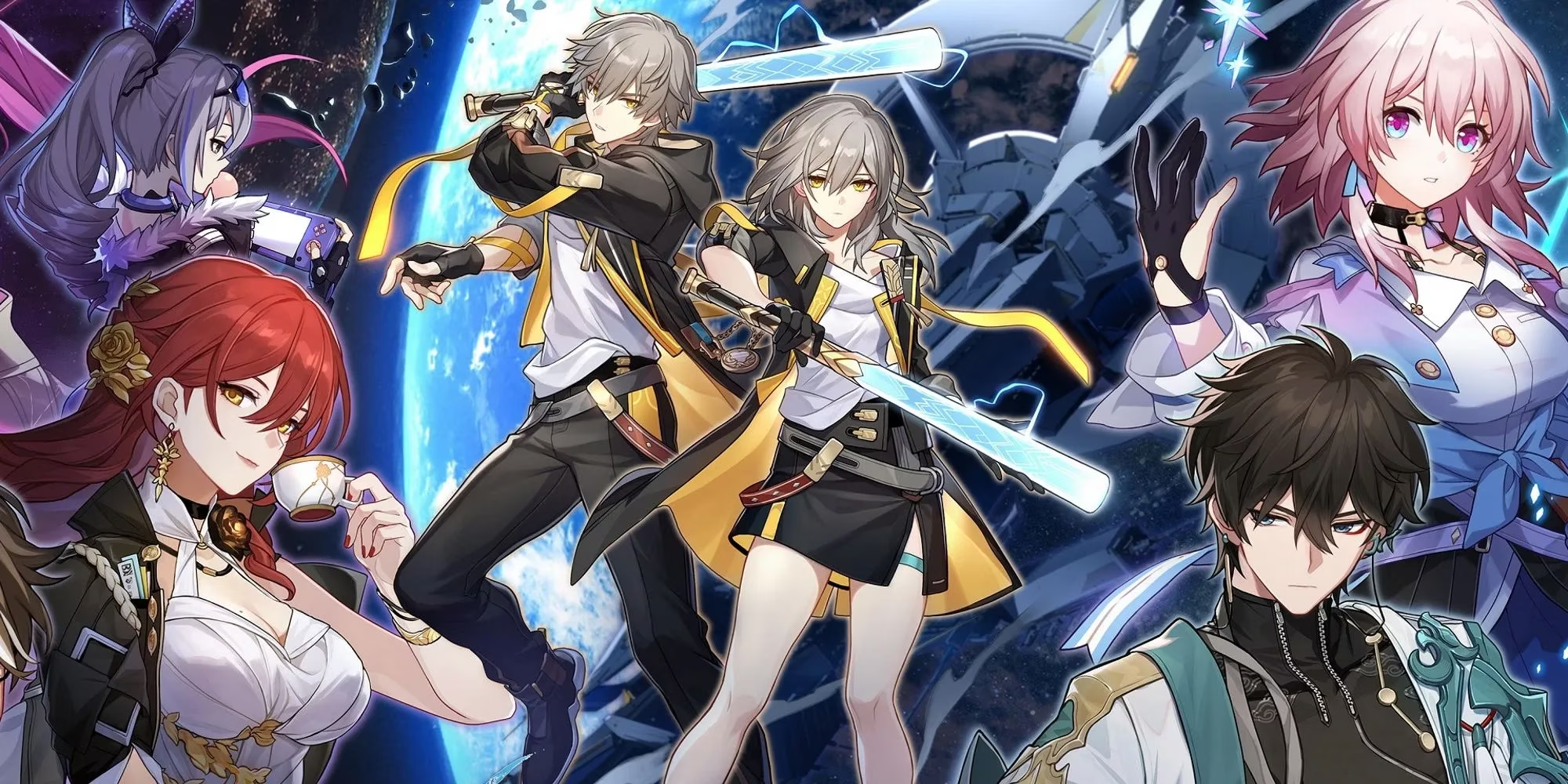
Despite that, the characters themselves blossomed under individual scrutiny. In Genshin, the elemental chaos often blurs identity into a firework of numbers; in Star Rail, the turn-based structure afforded a novel intimacy. Each team member became a page in a carefully read book, their contributions legible and remembered. The DPS’s buildup was a narrative arc, the tank’s defensive cooldowns a heartbeat. This closeness is where Star Rail mined its distinctiveness—turning combat into a chess match where every piece had a face and a voice.
The city exploration, however, could not escape the gravitational pull of comparison. The bustling hub echoed Mondstadt’s architectural spirit so faithfully it felt like a photocopy with the saturation turned up, a familiar song played in a different key. It was picturesque, undeniably, but it reinforced the notion that Star Rail was walking a tightrope between homage and dependency. Players who ventured into the outskirts often caught themselves avoiding fights, treating them as checkpoints to endure rather than moments to savor. That hesitation rarely plagues Genshin’s open world, where combat is a magnetic invitation.
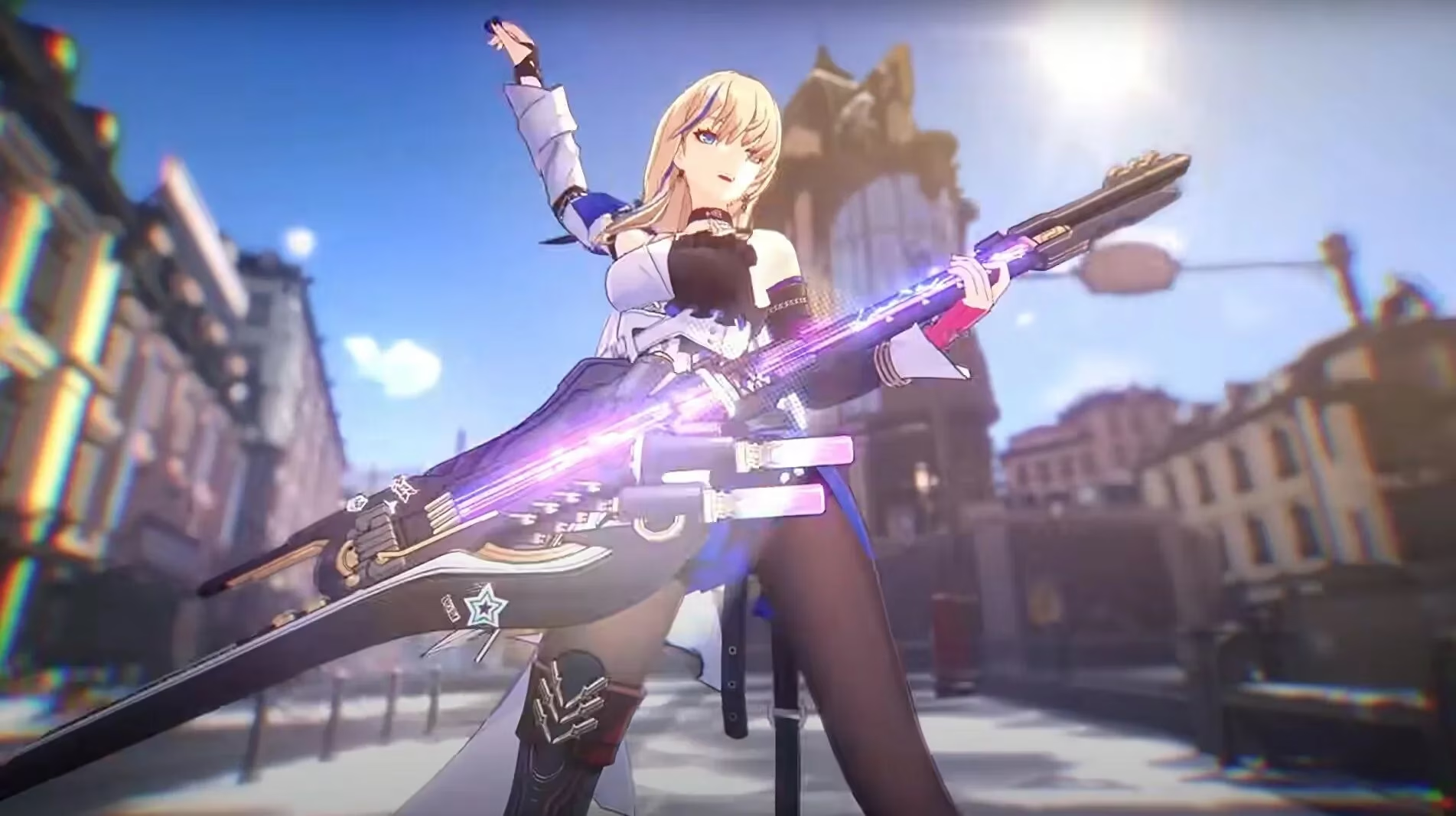
Fast forward to 2026, and the landscape has shifted. Honkai: Star Rail has proven its commercial and critical worth, drawing in millions who prefer the thoughtful tempo of turn-based tactics. The narrative has thickened with interstellar conspiracies and charismatic new characters, padding the combat loops with enough emotional weight that the wait between turns feels less hollow. Still, the shadow of Genshin remains a fascinating anomaly. For every player who praises the strategic depth, there’s another who mutters, “If only I could let them loose.” The game’s success proves that the gamble paid off—turn-based mechanics in a Genshin-shaped shell were not a contradiction but a complement. Yet the 2022 demo’s frustrations, especially the unbreakable loop during Fight Club, foreshadowed a lingering vulnerability: when the pacing stumbles, the entire structure creaks.
In retrospect, that hands-on at Gamescom was a microcosm of the game’s entire identity crisis—and its eventual triumph. Honkai: Star Rail did not need to outrun its comparisons; it needed to build a home inside them. By 2026, it has done exactly that, but the memory of that first cautious step remains a cautionary tale. Turn-based combat can be a slow-burning novel, but you have to make sure the plot is riveting. For some, the pages have turned into an epic; for others, they’re still stuck on page one, waiting for the action to break free.