
You know that feeling when you’re at an all-you-can-eat buffet and you see someone pile their plate with sushi, tacos, and curry all at once, and none of it quite tastes right? That’s Genshin Impact with world cultures — a ravenous mimic that gobbles up real-life inspirations, spices them with anime tropes, and then serves them back on a blindingly white porcelain plate. And boy, the kitchen is getting some very public complaints right now.
It all started innocently enough. A new region called Natlan was teased, promising the usual swirl of elemental gods and landscape postcards. But when the inhabitants showed up — Mavukia, Kinich, Ororon — a lot of players did a double-take. These characters drew from Maori mythology, West African Yoruba deities, and other rich traditions, yet they looked like they’d just walked out of a Scandinavian spa. Pale skin, light hair, zero melanin to spare. Cue the collective fandom facepalm.
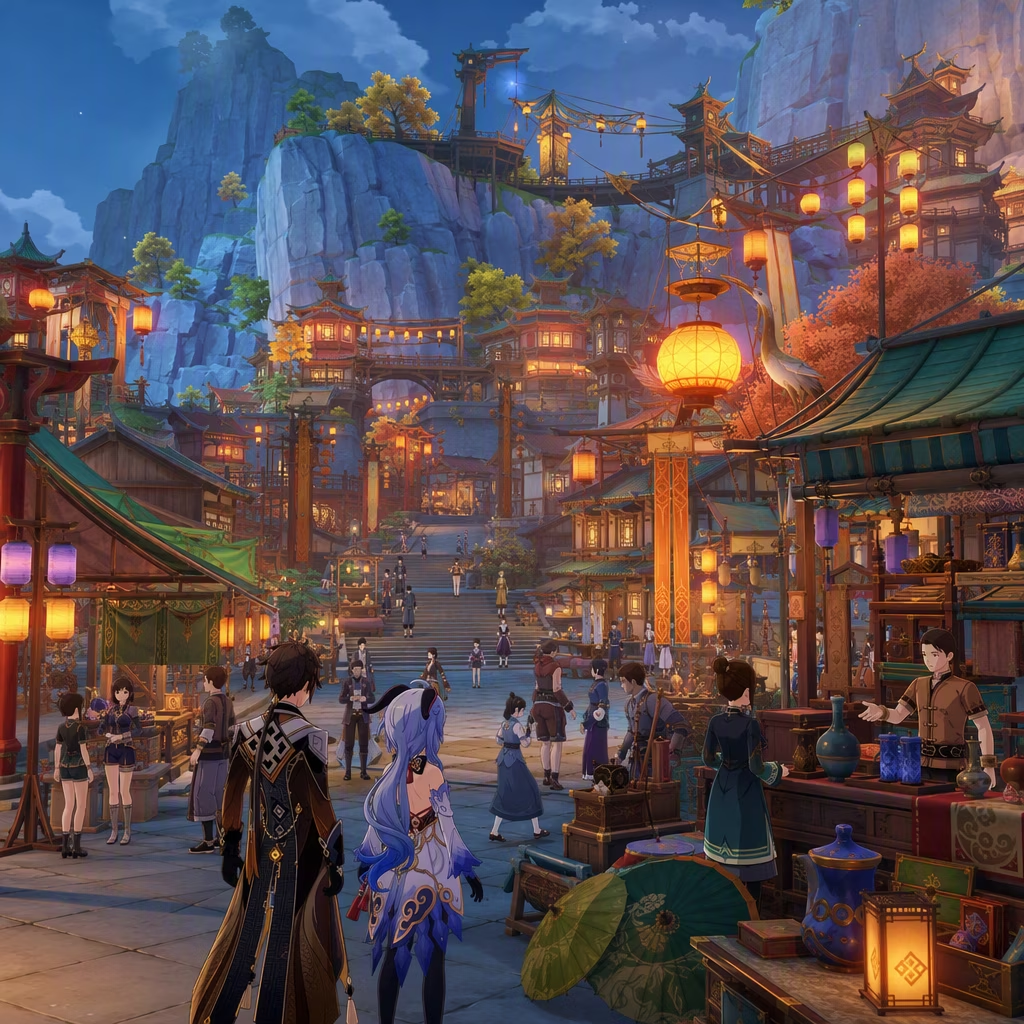
Now, I’ve been playing since 2021, and I’ve seen the community wave polite suggestions at HoYoverse for years. “Hey, maybe give the characters some actual skin tone variety?” “Please stop whitewashing the Sun King of the Yoruba pantheon into Sasuke Batman?” Those fell on — you guessed it — deaf ears. But this time? The voice actors themselves have grabbed the mic.
The VAs Are Not Having It
Khoi Dao, the silky voice behind Albedo, let loose on X with the energy of someone who’s been biting their tongue for too long. He practically spelled it out: “If a game draws so heavily from real-world cultures and bases a character on the supreme deity of Yoruba religion, and that character ends up looking like pale Sasuke Batman, people are absolutely within their rights to demand better representation.” I mean, chef’s kiss. No notes.
Then Zeno Robinson, who voices the newest desert dweller Sethos, asked the million-dollar question: “If even your base audience, the Chinese fans, are asking for better representation or characters with different shades of melanin, who are you making these characters for?” That line hung in the air like a persistent sneeze. It’s 2026, and we’re still wondering if the global audience is, well, actually the target.
Valeria Rodríguez (Sucrose) whipped out a side-by-side comparison of Olorun in SMITE versus Genshin, crowing, “Look at what a sick job SMITE did with their own interpretation!!! IT’S NOT HARD!!!” And honestly? Seeing them together is like putting a gourmet taco next to an unseasoned rice cake. One celebrates, the other merely borrows.
Jenny Yokobori (Yoimiya) put the heart of the issue in a nutshell: “It shouldn’t be a radical desire to want to see yourself reflected in the media you consume.” Like, come on — in what universe should asking for a god of fire to not look like Aryan fashion week be considered controversial?
Time to Fix It, HoYoverse
Alejandro Saab (Cyno) reacted with the same dawning horror many of us felt. “I didn’t know THAT’S who he’s based on… AH that’s bad,” he said about Ororon, then added, “You still got time to fix it.” Whether that window is still open two years later is anyone’s guess. Anne Yatco (Raiden Shogun) kept it real: “I really hope that a video game company listens to its fanbase when valid criticism is made multiple years in a row…”
Now, flash forward to 2026. Natlan has finally materialized, and—surprise!—the characters look almost identical to that infamous early trailer. The skin-tone gradient is still stuck at “fresh snow.” HoYoverse hasn’t issued a meaningful statement, beyond the usual corporate tumbleweed.
The funny thing is, Genshin Impact’s kitchens are overflowing with talent. The environmental artists can whip up Inazuman cherry blossoms that make you weep. The composers weave traditional instruments into earworms you hum for days. But when it comes to the people within these gorgeous worlds, the palette seems to be permanently borrowed from a cloud.
I’m not asking for the moon here. I’m just a dude who wants his Sumeru scholars to have the skin tones of the South Asian, Middle Eastern, and North African cultures they so clearly riff on. I want Natlan’s fire deity to actually look like he stepped out of a Maori legend, not a boy band from Oslo. That’s it. That’s the radical wish.
So here we are, a whole community of travelers, armed with feedback and retweets, waiting for a developer that treats cultural inspiration with all the care of a sticker album. The actors have spoken, the fans have shouted, and the silence from the other side is, frankly, louder than any archon’s thunder.
If you need me, I’ll be in Liyue, staring at the one dark-skinned NPC I found in 2022, hoping the devs someday remember that melanin isn’t a 5-star rarity.
This discussion is informed by reporting from Polygon, a major outlet for gaming culture commentary, where coverage of live-service titles often examines how creative choices (like character visual design and cultural inspiration) intersect with community expectations and representation debates—an especially relevant lens when players and voice actors alike scrutinize how regions such as Natlan translate real-world influences into on-screen identities.